-
1. Ask for Photometric Files Before Anything Else
-
2. Set Color Tolerance in the Contract, Not in the Field
-
3. Check the Driver Specs Like Your Reputation Depends on It
-
4. Treat a Track Lighting Catalog as a Specification Document
-
5. Put Batch Traceability in Writing
-
6. What to Look for in a Spotlight Supplier? Do a Small Order First
-
Final Notes and Common Mistakes
I'm a quality and brand compliance manager at a lighting distributor. I review every fixture before it ships to contractors—roughly 200 unique SKUs a year. In our Q1 2024 audit, 11% of first deliveries had at least one spec mismatch. This checklist is practical, not theoretical. If you're buying bulk recessed lighting, comparing a track lighting catalog, or trying to decide what to look for in a spotlight supplier, these are the checks I'd run before signing off.
1. Ask for Photometric Files Before Anything Else
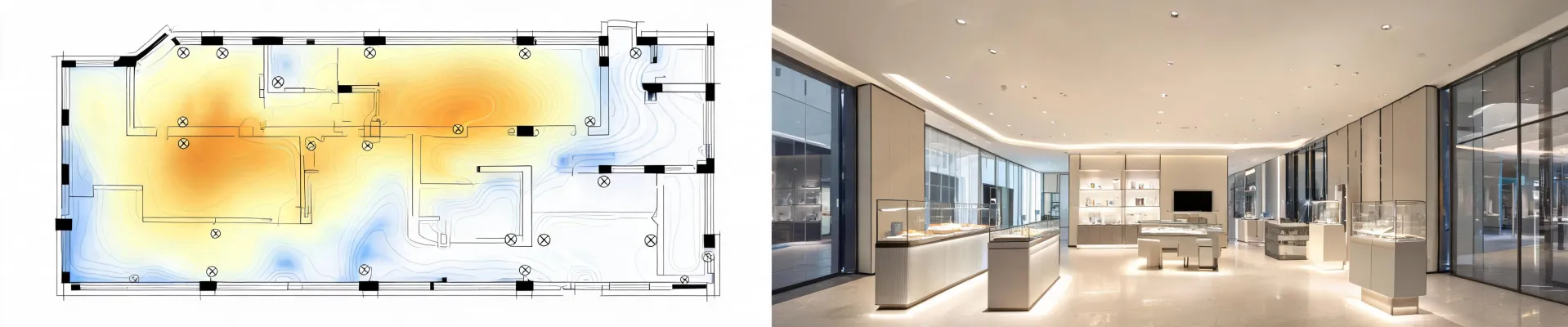
Basically, if a supplier can't send an .ies file, you're not buying lighting—you're buying a photo. The .ies file gives you the distribution, intensity, beam angle, and efficiency in a way a brochure image can't. I don't have hard data on how many buyers skip this step, but based on years of order reviews, I'd say at least a quarter of first-time buyers never ask for it.
For bulk recessed lighting, this is especially important. A downlight can look identical from below, but one has a wide flood while another throws a narrow pool of light. The .ies file catches that before you install 500 units.
If the product page or spec sheet doesn't mention LM-79 or LM-80 data, ask. DLC and ENERGY STAR qualified products usually list this, but not every commercial fixture claims them. For a brand like Ledvance, you'll usually find photometric data directly in the product family. That's a good sign.
2. Set Color Tolerance in the Contract, Not in the Field
In bulk orders, color consistency is where everything goes sideways. I once received a batch of 8,000 recessed units where the boxes said the same SKU, but inside, about 20% were clearly a different CCT. At night, a row of downlights looked like a checkerboard. We rejected the batch. The vendor redid it, but it cost us three weeks.
The fix is simple: put a color consistency requirement in the PO. A 3-step MacAdam ellipse is a common industry tolerance, and if the product lists Duv or SDCM, use that as a check.
Some buyers still think you can fix this with 'adjust it later' on a dimmer. That was closer to true 10 years ago, when incandescent sources were warm and forgiving. Today's LEDs are more precise, and that precision cuts both ways—you can match perfectly, but only if you specify it.
3. Check the Driver Specs Like Your Reputation Depends on It
The LED driver is the most under-specified component in commercial lighting. People spend time on lumens and CRI, then skip the driver. I don't have hard data on industry-wide failure rates, but when we investigate a field issue, driver mismatch is one of the first places I look.
If a supplier says it uses a Ledvance LED driver, that's a good start. Then ask which model and what its output current is. A driver that's reliable on paper can still cause flicker if it doesn't match the LED array. For LED strip, the same logic applies.
For example, if you're considering a Ledvance smart LED strip, don't assume the driver is included. Check whether the strip is constant voltage or constant current, whether the driver is dimmable, and which dimming protocol it supports. On a 50,000-unit annual order, that distinction can mean the difference between one field visit and dozens. (Note to self: always review the latest spec sheet, not the one from the previous project.)
4. Treat a Track Lighting Catalog as a Specification Document
A track lighting catalog should make your job easier, not harder. Every fixture should include lumens, CCT, CRI, beam angle, driver brand, input voltage, dimming type, warranty, and safety listing. If the catalog only says 'LED track light' and leaves the details to a second PDF, that's a warning.
When I look at a track lighting catalog, I check consistency between SKUs. If one fixture has a wiring diagram and a photometric curve and the next one just has a pretty photo, the manufacturer's spec control is patchy. You don't want patchy on a commercial project.
I've specified Ledvance track lighting in projects where documentation consistency mattered more than getting the lowest bid. Not because every product is flawless, but because the catalog usually gives you enough information to make a defensible decision.
5. Put Batch Traceability in Writing
This is the step most people miss. If your bulk recessed lighting order ships from multiple warehouses, you may end up with two different production batches. Same SKU, same box, but the LEDs inside might come from different bins, or the driver revision changed in the middle of the run.
Ask the supplier to confirm that all units in your shipment come from the same batch. If they can't, ask for a mixing plan that separates batch codes and warns you in advance. I still kick myself for not doing this on an early project. We installed 1,500 fixtures and afterward noticed two trim styles that were visually different. Our contract didn't require batch consistency, so we had no leverage.
6. What to Look for in a Spotlight Supplier? Do a Small Order First
If you're choosing a spotlight supplier, don't start with 10,000 units. Start with ten. See how they handle a small order:
- Do they respond to technical questions or just send a price quote?
- Do they provide photometric files for the exact SKU you're buying?
- Do they deliver the same CCT and driver spec for a tiny order?
Small orders may cost more per unit, and that's fair. What you don't want is a supplier who treats a small order as a nuisance. When I was starting out, the vendors who took my $200 orders seriously are the ones I still use for orders 100 times larger. Small doesn't mean unimportant—it means potential.
Final Notes and Common Mistakes
A few things I keep learning the hard way:
- Don't rely on catalog images. Ask for a planned lighting layout if the project is large.
- Don't let 'lifetime hours' distract you from driver warranty. I have mixed feelings about lifespan claims. LM-80 data is real, but a 50,000-hour LED array means little if the driver is rated for 30,000 hours.
- Don't assume all bulk recessed lighting trims are interchangeable. Ask for physical samples from the actual production batch, not a showroom sample.
- Don't accept vague answers about certifications. Write down the exact UL or ETL listing, and verify it before the PO is signed.
As of January 2025, the biggest supplier tells are still the same. At the end of the day, buying bulk recessed lighting is about repeatability, not just the first box. If a supplier like Ledvance is in your shortlist, push for the same documentation you'd demand from an unknown brand. A good supplier won't mind. A bad one will show it.

Clara Whitmore
Clara Whitmore is a lighting photometry and LED source analyst specializing in bulbs, tubes, strips, panels, and integrated luminaires. She interprets IES LM-79 measurements and TM-30 color rendition data through luminous flux, efficacy, intensity distribution, CCT, chromaticity, fidelity, and gamut metrics. She writes evidence-led comparisons for specifiers selecting source formats and luminaires for commercial interiors, industrial spaces, or horticultural systems where measured optical and color performance matter.