Identity
Match family, output, CCT where relevant, optic and emergency or control configuration. A similar filename is not proof of an exact configuration.
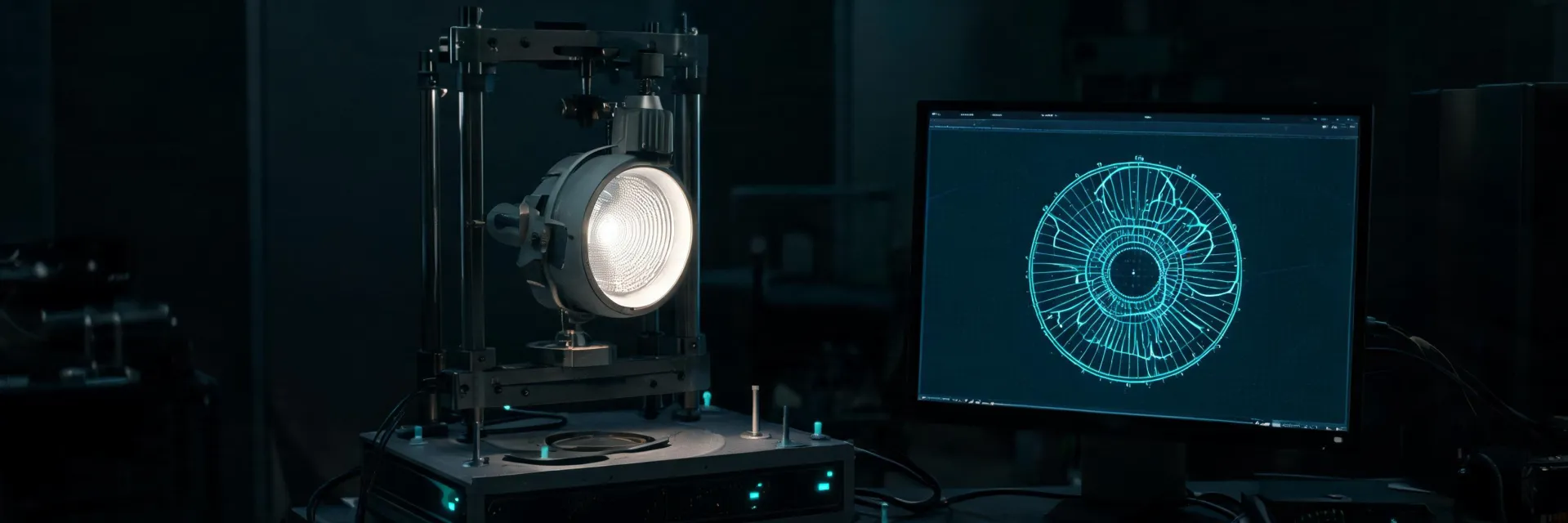
IES · LDT · distribution guidance
A technical center for choosing the right file, reading distribution evidence and carrying documented assumptions into lighting calculations.
An IES or LDT file is a structured description of measured luminous intensity. Its value emerges when the correct file is associated with the exact luminaire, optical configuration, output package and test condition. Before accepting a calculation, verify that the file identity matches the scheduled product and that the calculation geometry reflects mounting height, surface reflectance and the relevant task plane.
This resource center organizes the questions that help lighting designers, engineers and procurement teams interpret files responsibly. It does not replace an applicable product data sheet or a project-specific calculation; it creates a clearer route to both.
Selection trade-offs: maximizing lm/W can reduce connected load, while prioritizing optical control, CRI and lower glare can better serve visual tasks; neither objective is universally superior. Centralized controls offer consistent strategy management, while distributed controls can simplify local zoning and fault isolation. Integrated light engines support compact thermal design, while replaceable drivers and sources may improve field serviceability.
Limits of the evidence: photometric files describe a tested configuration, not every manufacturing option. Calculated UGR is sensitive to room dimensions, reflectances and observer positions. L70 projections do not predict every field failure mode, and thermal conditions can change lumen maintenance. Certification marks apply only to listed models and markets. Dimming behavior must be confirmed with the actual driver, control device and programmed sequence.
Match family, output, CCT where relevant, optic and emergency or control configuration. A similar filename is not proof of an exact configuration.
Review polar curves, beam angle, cut-off and upward light. Peak candela alone cannot describe uniformity or vertical illumination.
Model room geometry, reflectances and maintenance assumptions consistently. Compare alternatives on the same calculation basis.
Specific reports, declarations and certifications remain product- and market-dependent. Request the documentation linked to the selected ordering code.
Include the product family, optic, output package and calculation format so the resource request can be checked precisely.
Request photometric resources